


A little over a week after the date of this publication, our journey through the Jubilee Year of Hope will come to an end. On December 24, 2024, we were invited to become “Pilgrims of Hope,” sharing the message of hope in Christ within our families and our communities, and growing in that hope in our own lives.
The practice of a jubilee year has ancient roots. In 1300, Pope Boniface VIII instituted the first Christian Jubilee, a year set aside to encourage the faithful to embark on pilgrimages, to repent of their sins and forgive the sins of others, and to renew a focus on the spiritual life. Since then, the Church has designated each new Jubilee as a special year of grace and forgiveness, offering the faithful an opportunity to obtain a plenary indulgence. Originally occurring every 50 years, this practice is now observed every 25 years, and serves as a reminder of God’s love, mercy, and continual call to conversion.
Pilgrimages are a powerful way to inspire faith whether by walking in the footsteps of Jesus in the Holy Land, visiting sites significant in the lives of saints, or by visiting historic churches. For many, travel to the Vatican might be a once-in-a-lifetime opportunity, and maybe that opportunity wasn’t economically or logistically feasible this year. A trip to the Holy Land similarly may have been difficult, but for reasons that are disheartening, as conflict has embroiled the region. At a Mass that kicked off our local celebration of the Jubilee, Bishop Gregory Parkes mapped out our personal pilgrimage through this Year of Hope, regardless of any opportunities to travel abroad: “As pilgrims of hope, we are called to live out the call to seek Christ, the source of our hope and the source of the meaning for which we long, in all that we do and in every moment of our lives.”
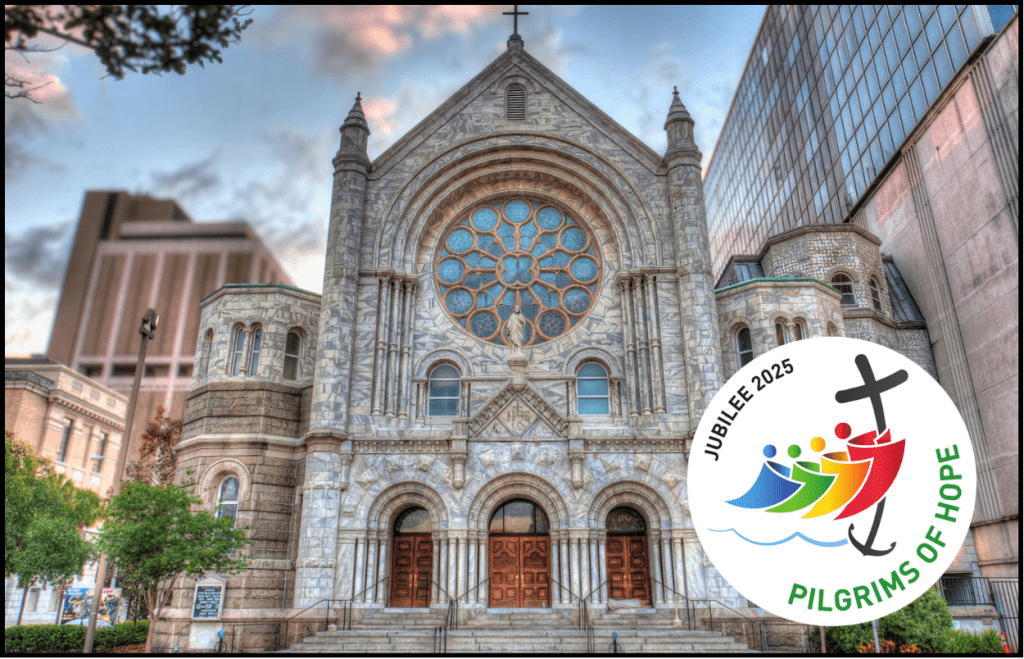
Bishop Parkes called on Sacred Heart to serve as one of six official Places of Pilgrimage within the Diocese of St. Petersburg throughout the Jubilee Year. The full list included the Cathedral of St. Jude, as well as one church from each the five counties in the diocese. Our parish saw an uptick in visitors through this designation. Docents from the Historical Society have provided dozens of additional tours this year, to visiting groups from across the state and southeast and pilgrims from as far off as Sweden or South America. Pilgrimage passports were handed out to those making the trek across the diocese, with prayers and instructions for the plenary indulgence afforded to those making the local journey. The diocese also promoted a way for children to get involved, creating a cartoon image of Bishop Parkes for families to take photos with while visiting the local sites.

If this Jubilee itself hasn’t been enough of a historical moment, many that had the chance to travel to the Vatican were greeted by another. With the election of Robert Francis Cardinal Prevost to the papacy, becoming Pope Leo XIV in early May, their time in Rome coincided with an early chance to hear from the first American pope in person during the Angelus or General Audiences.
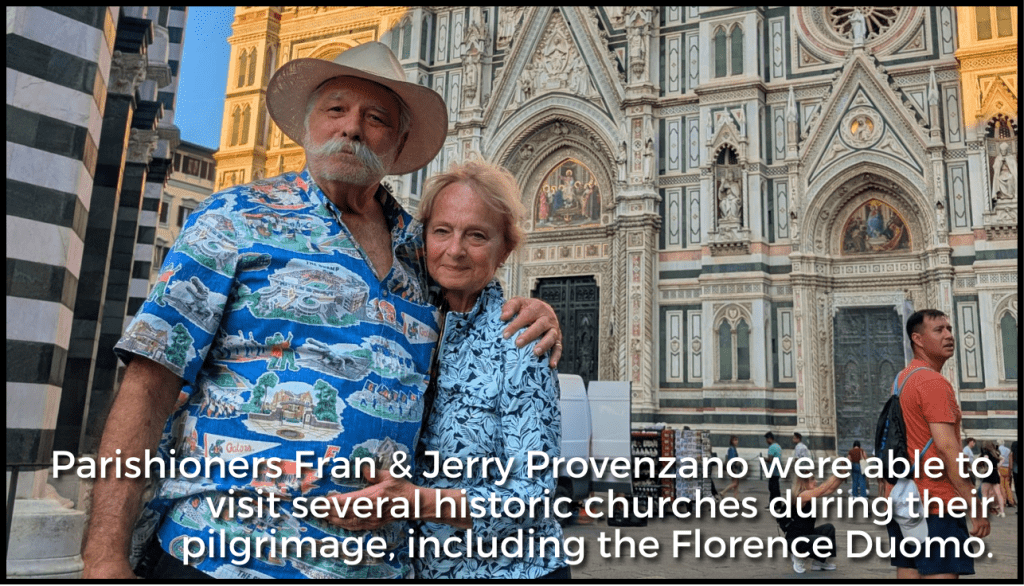
“It is hard to describe the feeling that you have when you are there,” said Fran Provenzano, a long-time parishioner who is currently chair of Sacred Heart’s Outreach Committee. She and her husband Jerry were able to visit the Vatican for the Jubilee as part of a larger trip across Italy. “It was pouring with rain the day that we were there, and yet you felt a togetherness, and a humbleness, that made it feel as if it were a perfect day.
“People were sharing umbrellas and taking care of each other, and Pope Leo exuded this aura of humility and openness during his address. It was truly something special.”
“As I walked through the Holy Doors, I distinctly remember praying to God for peace in our world,” said Tony Miranda, Sacred Heart’s business operations manager. Miranda was able to visit the Vatican over the summer before beginning his new role on the parish staff. Holy Doors are special entrances in major Catholic basilicas, only opened during Holy Years (Jubilees) by the Pope, symbolizing a passage from sin to grace and a deeper connection with Christ, allowing pilgrims to receive indulgences.
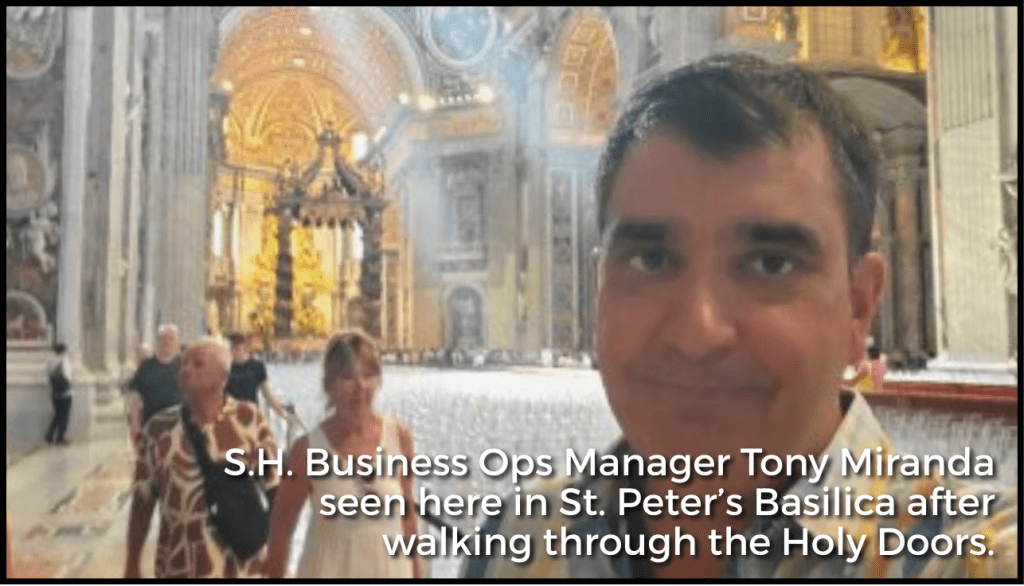
Originally, there was only one door, at the Basilica of St. John Lateran, which is the cathedral of the Bishop of Rome. Later, to allow as many pilgrims as possible to take part in the Jubilee experience, the other Roman Basilicas also opened their own Holy Doors, including St. Peter’s, St. Mary Major, and St. Paul Outside the Walls. Pope Francis opened a new door for Jubilee 2025, in Rebibbia Prison, Rome, signifying hope and mercy for all, including prisoners. On Gaudete Sunday, Pope Leo XIV presided over the final major celebration of the Holy Year, calling for renewed commitment to justice, rehabilitation, and hope during a Mass dedicated to prisoners in St. Peter’s Basilica, attended by around 6,000 pilgrims from some 90 countries. An estimated 32-35 million Catholics will have made the trip to Rome by the Jubilee’s end on January 6, 2026, when the Holy Doors will shut, and end what has certainly been a year filled with hope.
Text by Rob Boelke | Director of Communications